Summer Destinations: UK vs Europe
Discover where your money stretches further for summer holidays in 2026.



With the cost of living continuing to rise and geopolitical tensions shaping travel decisions, many UK households are reassessing how they spend their money and where they choose to holiday.
According to recent research[1], nearly half (47%) of Brits with travel plans are deciding to cut back due to rising flight costs, while a fifth are considering skipping a trip altogether - reflecting a shift in the way Brits spend their summer, and money.
To help budget-conscious travellers make informed choices, we compared the cost of a week’s stay across 52 summer holiday destinations in the UK and Europe. Our analysis considered a range of expenses, including return flights per person, fuel and local transport, accommodation, meals, drinks, and attraction prices, alongside factors such as average weather conditions and online popularity. Destinations were ranked using a weighted affordability index combining transport, accommodation, food and drink costs, attractions, and travel experience factors such as weather and popularity.
Our research found that certain trips abroad could actually cost less than staying closer to home. However, everyone’s financial situation is different, but this guide offers helpful insights into where your money could go further this summer, as well as tips on how to plan a budget-friendly break without compromising on the fun.
Which destinations are best overall for experience and expenses?
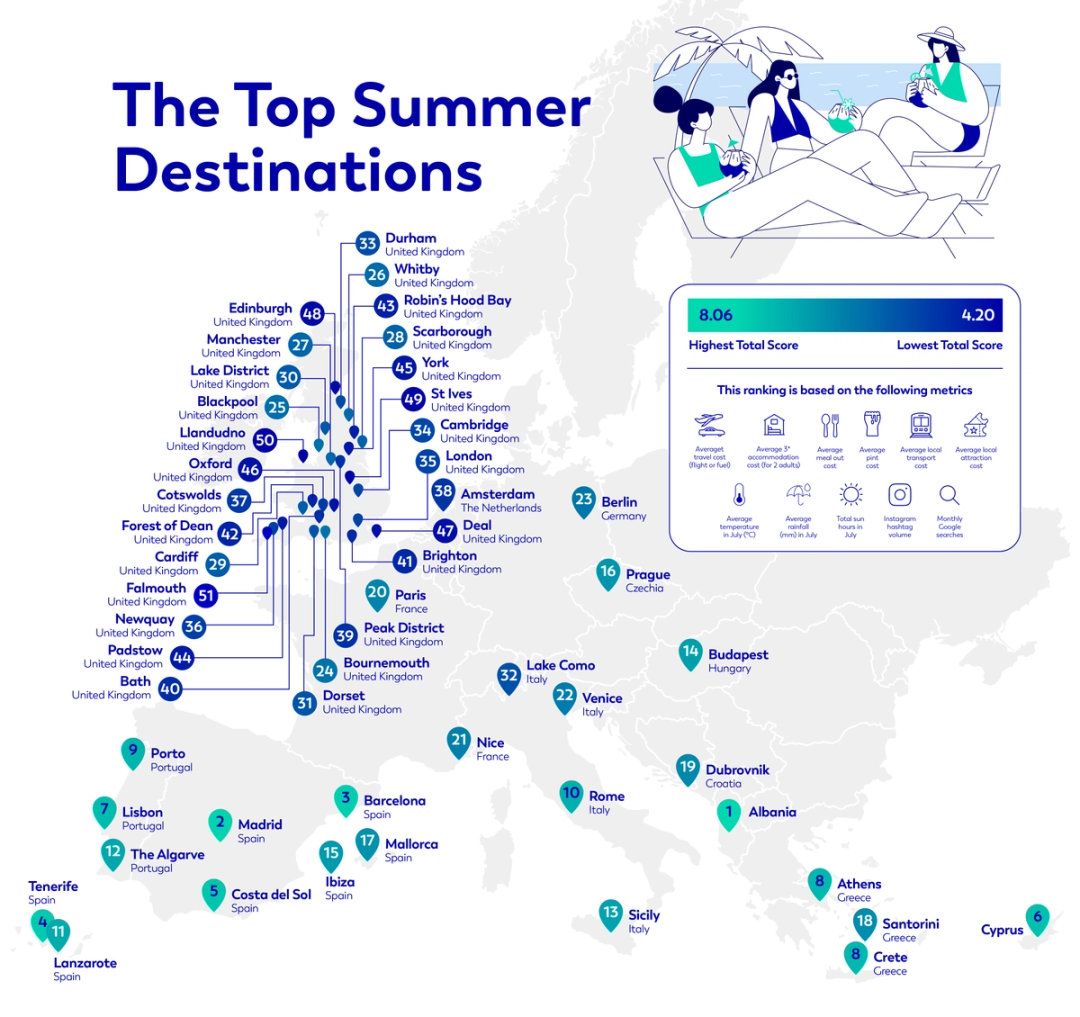
The analysis was clear when reviewing popular summer destinations across the UK and Europe: all of the top 10 are located outside the UK, with the first UK location, Bournemouth, coming in at 23rd place.
This ranking is based on a weighted index that considers both cost and overall experience factors, meaning destinations are assessed not only on price but also on elements such as weather and popularity. The data suggests that heading abroad this summer may offer better overall value than opting for a staycation
Albania
Albania takes the spot, offering pristine beaches and breathtaking UNESCO World Heritage sites. Popular with tourists for its hospitality, coastline and relaxed atmosphere, Albania offers some of the least expensive amenities: local transport (£0.36) and a meal out for two (£7.23) are the most affordable of all the destinations analysed. Additionally, accommodation pricing is very attractive, costing £381 on average for a week for two and average return flights don’t exceed £100 per person. Temperatures average 24°C in July, ideal for a warm but not overwhelmingly hot summer holiday.
Compared to the other destinations analysed, Albania gets less online popularity, recording 180,000 monthly searches, but that’s what makes it a hidden gem, and one worth visiting soon before it gets onto every holidaymaker’s radar.
Madrid
Madrid follows closely, maintaining second place from last year’s report. Spain’s capital offers slightly cheaper flights than Albania, at £80 for a return ticket, and accommodation for two is affordable, at £673 in peak season. With 358 hours of sunshine in July alone, low average costs for drinks (£3.03 for a pint), local transport (£1.30), and attractions (£46), Madrid is hard to beat for those wanting an affordable yet exciting city experience this summer.
Barcelona
Spain claims two spots in the top three, with Barcelona rounding out the top three. The city offers enjoyable summer temperatures, at 22°C on average in July and over 300 hours of sunshine, remains relatively accessible compared with many UK destinations, with weekly accommodation for two adults averaging just over £1,135 and return flights £90.
Between its beaches, vibrant culture, and affordable attractions (£55 on average), there’s plenty to keep everyone entertained, making Barcelona ideal for a coastal getaway without breaking the bank.
The most affordable summer destinations
For many Brits, cost remains the biggest factor when choosing a holiday destination. With this in mind, we analysed each location based on price across key travel categories, including return flights from London to European destinations and fuel costs for UK trips, as well as weekly accommodation, meals, drinks, local transport, and attraction prices.
These metrics were then used to calculate a weighted cost score, helping determine which destinations offer the best overall value for money.
Once again, European cities lead the way, reinforcing the fact that destinations abroad may not always be the most expensive option.
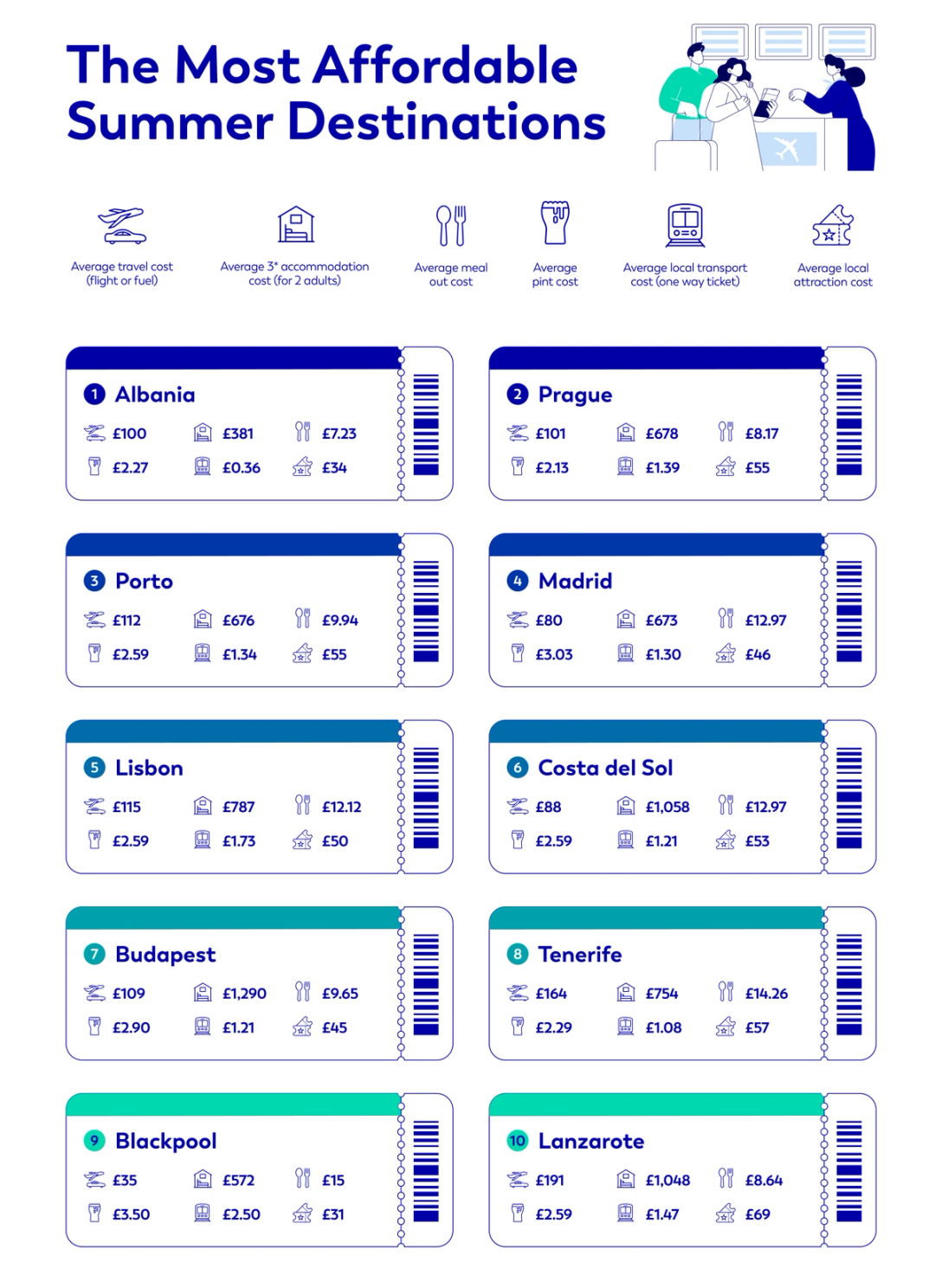
Albania
Again, Albania claims the top spot, this time as the most affordable summer destination. With consistently low costs across food, drinks, transport and attractions, as well as affordable weekly stays (£381) and return flights (£100), Albania is a standout choice for travellers looking for an enjoyable holiday without the hefty price tag.
Prague
Prague comes in second place, known for its fairytale-like architecture and charming cobblestone streets. Return travel costs around £101 per person, but where Prague really stands out is in daily costs, with a meal out for two averaging just £8.17, and pints costing £2.13, the cheapest of all destinations analysed.
Porto
Close behind is Porto, rounding out the top three most affordable summer destinations. While travel costs and accommodation are slightly more expensive than the top two, at £112 for return flights and £676 for a weekly stay for two, meals out (£9.94), drinks (£2.59 for a pint) and local transport (£1.34) help balance the budget. Enjoy a glass of Port wine in one of the city’s historic wine houses or walk across one of the six iconic bridges at sunset to get the full Porto experience.
*Destinations are ranked using a weighted affordability index based on transport, accommodation, food and drink and attractions.
The most expensive summer destinations
While some destinations display higher costs due to luxury and exclusivity, others reflect the reality of high demand, limited supply, and overall inflation driven by tourism. Looking solely at the weighted cost metrics used in our analysis, UK destinations make up the majority of the most expensive spots based on the overall affordability index.
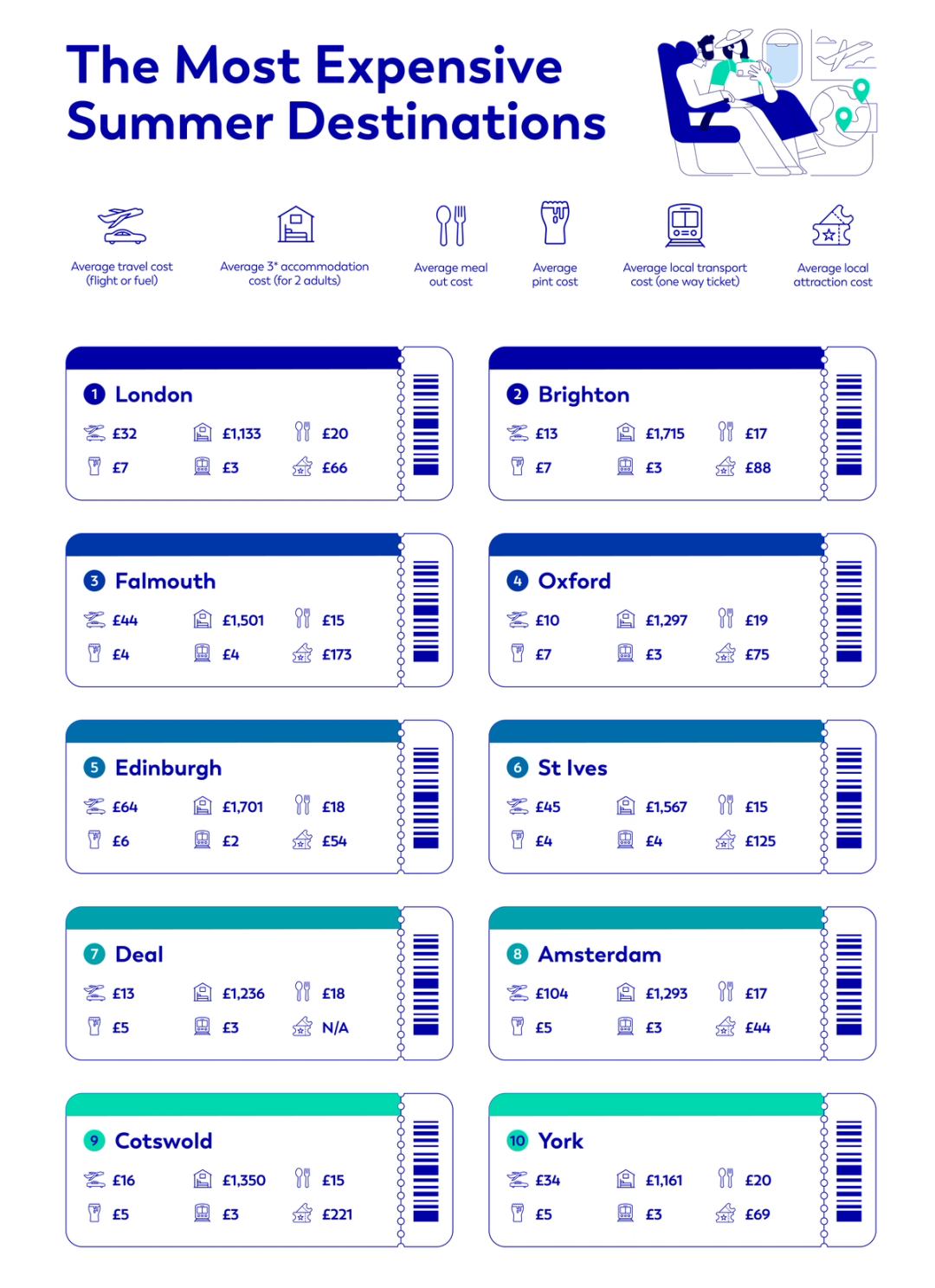
It’s no surprise to see the capital city, London, leading the way. A weekly stay in a 3 star hotel is the most expensive of all destinations analysed at £1,133 for two, a meal out averages £20, and a pint £7, over three times more than in Prague. However, London is home to many free attractions, such as the iconic British Museum or the National Gallery, helping to offset the cost of a trip there.
Brighton takes second place in the total rankings, with accommodation costs averaging £1,715 for two people for a week, the second highest of all locations analysed.
Falmouth rounds off the top three most expensive summer destinations, with accommodation costs averaging just over £1,500 for a week for two adults, making it one of the priciest UK seaside escapes analysed in the study. Local attractions also come at a premium, averaging £173, while restaurant and entertainment costs further add to the overall spend.
Despite its popularity thanks to its coastal scenery, beaches and harbourfront atmosphere, the research suggests travellers could secure a week-long European getaway with warmer weather and lower overall costs for significantly less.
*Destinations are ranked using a weighted affordability index based on transport, accommodation, food and drink and attractions.
The most popular summer destinations online
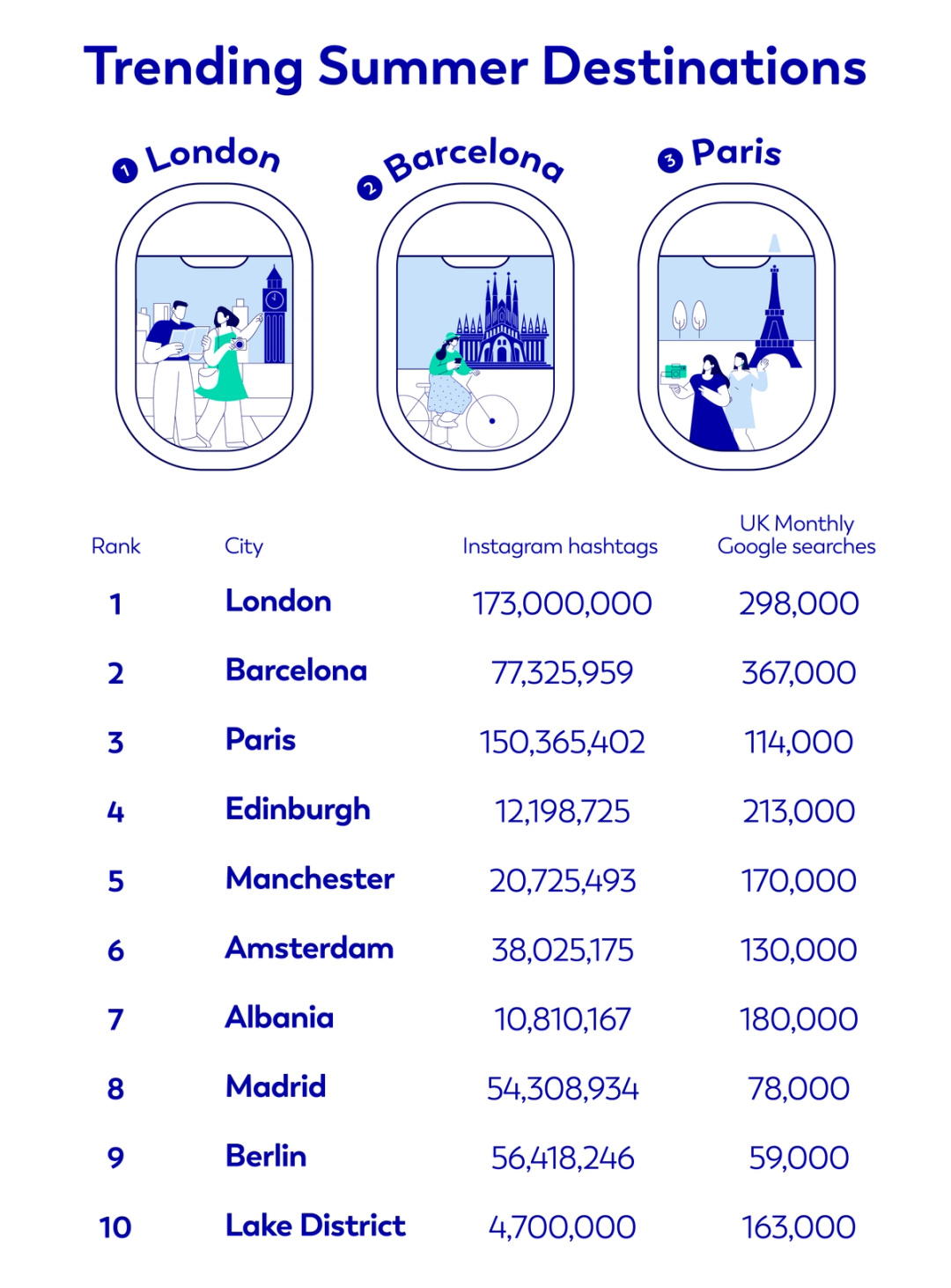
While in most cases, affordability and weather are the key considerations when booking a trip, it’s undeniable that social media has an influence on how Brits decide their next holiday. With some destinations being popular for their culture, scenery or atmosphere, we analysed Instagram hashtag volume and UK monthly Google searches to reveal which locations are creating the most buzz.
Although the most expensive summer destination, London ranks as the most popular online. The capital records nearly 298,000 Google searches every month in the UK, the second highest in the ranking. London also has over 173 million posts on Instagram, featuring a mix of its buzzing atmosphere and iconic landmarks.
Barcelona follows close behind, attracting more than 77 million Instagram hashtags alongside 367,000 monthly UK searches — the highest search volume in the top 10 ranking. Known for its combination of city beaches, vibrant nightlife, renowned architecture and warm summer climate, Barcelona continues to appeal to travellers looking for a balance of culture, relaxation and affordability in one destination.
In third place is Paris, boasting 114,000 monthly searches and more than 150 million Instagram hashtags, highlighting its enduring popularity among travellers. The French capital continues to attract visitors with its iconic landmarks, world-famous food scene and vibrant cultural offering, while its accessibility from the UK and wide range of accommodation options make it a consistently appealing choice for a summer city break.
UK vs Europe: Which offers better value in 2026?
When comparing the 52 destinations, one theme stood out: European destinations consistently offer better overall value than those in the UK.
Despite often requiring longer travel, many European holidays were cheaper, or offered more for the same money, than the UK options. Eight of the ten most expensive destinations in the study were in the UK, with London topping the list. Meals and drinks in particular tended to be higher, largely due to higher domestic prices and the relative strength of the pound against the euro.
Weather was another defining factor. European destinations offered significantly more sunshine, higher temperatures, and less rainfall, with places like Cyprus, Santorini, and Crete each boasting over 360 hours of sunshine in July alone, more than double many UK destinations, and over four times what Edinburgh receives that month. More sunshine means more opportunity to enjoy outdoor activities without spending more.
For those set on a UK summer holiday, your best bets are Deal and Brighton, which top the UK sunshine rankings with 187 and 178 hours of sun in July, respectively. But for nearly twice the sun and an overall cheaper experience, holiday-goers might be more tempted by Albania, where the sun shines for 335 hours in July, and a dinner out will cost you an average of £7.23.
However, UK staycations have their advantages for Brits. They are geographically accessible, more familiar, and in most cases, are easier to reach without airports and long flights. But if you’re more flexible, European destinations offer a good balance of cost, weather and experience.
That said, everyone’s financial and personal circumstances are different. What works for one traveller won’t be right for another. But for those open to travel a bit further and longer, Europe appears to offer a better balance between cost and holiday experience.
Tips for a budget-friendly summer of travel
When it comes to summer holidays, some destinations offer better value for money than others, and many of the most affordable ones are outside the UK. That said, not every Brit is planning a trip abroad this summer; recent data suggests over half (52%) are opting for a staycation instead.
While UK destinations seem more convenient, our study shows that a week-long staycation can often cost more than a comparable trip abroad. This is not suggesting one option is better than the other; it all comes down to individual budgets, priorities, and preferences. But for anyone trying to make their money go further this summer, a little research and planning can go a long way.
Scott Yule, Commercial Director at Aqua, comments, “Staying on budget doesn’t mean compromising on fun, good weather or a great overall experience. Whether you choose to stay in the UK or travel abroad this summer, research and planning can make a significant difference, so you can enjoy your holiday without the stress of overspending. A few simple strategies can help cut costs and get more from your holiday. Remember, it’s not about spending less, it’s about spending smarter.”
- Travel midweek or outside of peak periods
Flights and trains tend to be cheaper if you travel midweek, particularly on Tuesdays or Wednesdays, which can make a noticeable difference to overall costs. Similarly, if you have the flexibility, avoiding peak periods such as school holidays or travelling in the off-season, like late autumn or early spring, can bring prices down significantly.
2. Planning ahead to find the best deals
A little upfront research can go a long way in keeping holiday costs down. Take time to compare different airlines and accommodation types, look at price histories and check whether packages offer better value than booking each element separately. Tools that track fare fluctuations or highlight unusually high or low prices can help you spot when something is genuinely a good deal. It’s also worth exploring alternative airports, lesser known destinations, or bundled extras. Sometimes the best savings come from simply widening the search.
3. Check your bank’s overseas charges
Many banks and credit card companies charge fees for spending in a foreign currency and these costs can add up quickly. It’s worth checking with your provider to understand their charges and whether they offer any options that help reduce overseas fees. Also, when paying in shops or restaurants abroad, always choose to be charged in the local currency rather than pounds to avoid any additional currency conversion fees.
4. Minimise your fuel consumption and cost
If you’re planning to drive, it’s important to factor in fuel costs early, as prices remain unpredictable and can rise quickly, which is already influencing many Brits’ summer plans. To help keep costs down, plan your journey to avoid delays and traffic, travel light to reduce fuel consumption, and choose accommodation close to your main activities so you’re not relying on the car once you’ve arrived.
5. Consider having travel insurance
Taking out travel insurance won’t directly help you reduce your holiday costs, but it can protect you from losing money if anything goes wrong, whether that's a cancellation, unexpected illness, or disruption to your travel plans (depending on the type of cover you’re subscribed to). Given how unpredictable the travel landscape has been in recent years, this small upfront cost can help you save stress and money further down the line.
Methodology
To uncover which popular holiday destinations are the best, we ranked 52 locations across both the UK and Europe based on the following metrics:
- Average fuel costs
- Average flight costs
- Average temperature in July (UK destinations)
- Average temperature in July (European destinations)
- Average rainfall (mm)
- Average sunlight hours
- Average 3* accommodation cost (for one week away for two adults)
- Average attraction cost
- Average meal in a restaurant cost
- Average pint cost
- Local transport cost
- Instagram hashtag volume | Instagram
- Monthly Google searches | Google Keyword Planner
To calculate the overall top summer destinations, we gave each metric an index score out of 10, and then to calculate an overall score, we took an average of each metric’s individual ranking.
To calculate the most and least affordable destinations were ranked based on a weighted affordability index rather than raw weekly spend, to reflect overall travel costs and experience across multiple factors.
Euros (EUR) converted to British Pounds (GBP) by multiplying the Euro value by the market exchange rate at the time of collecting the data.
All data is correct as of May 2026.
[1] Holiday cutbacks could funnel millions into UK savings this summer | DIY Investor
Contributors


You might also like
Slide 1 of 3
The best staycation destinations in the UK
New research by experts at credit card brand Aqua reveals which UK locations are the best, and most affordable, for...


Savvy holiday spending
Aqua explores the holiday spending habits of people across the UK.


How to use your credit card while travelling ...
Heading abroad with a credit card? Find out how to use your credit card safely and affordably while travelling. Lea...
The smart way to build better credit
Aqua is the credit card that gives you the power to improve your credit score